
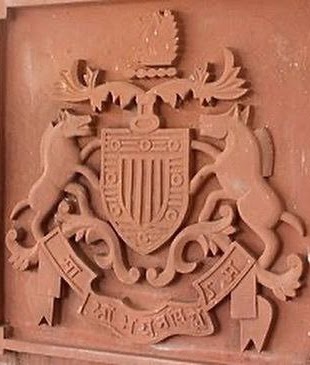
Rajgarh State was a princely state in British India, located in the present-day Madhya Pradesh. It was established in the late 15th century and ruled by the Umath Rajputs, a branch of the Paramara dynasty. The state’s capital was Rajgarh, and it was part of the Central India Agency under the Bhopal Agency during the British Raj.
🌄 Emergence of Narsinghgarh State
In 1681, a significant event led to the formation of a new princely state. Paras Ramji, the younger brother of Rawat Mohan Singhji, the then ruler of Rajgarh, established Narsinghgarh State. This separation was a result of internal family arrangements, and Paras Ramji carved out this new state from Rajgarh’s territory.
🧬 Shared Lineage and Cultural Ties
Both Rajgarh and Narsinghgarh states were ruled by branches of the Paramara dynasty, specifically the Umath Rajputs. This shared lineage meant that the two states had similar cultural practices, traditions, and administrative structures. The rulers of both states held the title of Rawat, and their courts followed comparable protocols and ceremonies.
🏛️ Political Dynamics and British Relations
During the British colonial period, both Rajgarh and Narsinghgarh came under the Bhopal Agency of the Central India Agency. While Rajgarh maintained its status as a princely state, Narsinghgarh was initially a feudatory to the Holkar rulers of Indore State. However, in 1872, Narsinghgarh was recognized as a separate princely state by British India.
🏯 Architectural and Cultural Developments
The rulers of both states invested in architectural projects that reflected their heritage and devotion. In Narsinghgarh, Paras Ramji constructed the Narsinghgarh Fort and a temple dedicated to Shri Narsingh Bhagwan, the state’s patron deity. These structures not only served defensive purposes but also became cultural landmarks.
📜 Integration into Modern India
Following India’s independence in 1947, both Rajgarh and Narsinghgarh acceded to the Indian Union. They were integrated into the state of Madhya Bharat in 1948, which later became part of Madhya Pradesh in 1956.
🧾 Conclusion
The histories of Rajgarh and Narsinghgarh are deeply intertwined, rooted in shared ancestry and cultural traditions. The establishment of Narsinghgarh as a separate state by Paras Ramji in 1681 marked a significant chapter in the region’s history, reflecting the complexities of princely state dynamics in pre-independent India. Both states played pivotal roles in the cultural and political landscape of central India, leaving legacies that continue to be remembered today.